
Bird Spikes South Africa
Company
Shop By Category
T&Cs
Shop Online

Squirrel Spikes | Squirrel Deterrent Spikes | Squirrel Spike Strips for Fences

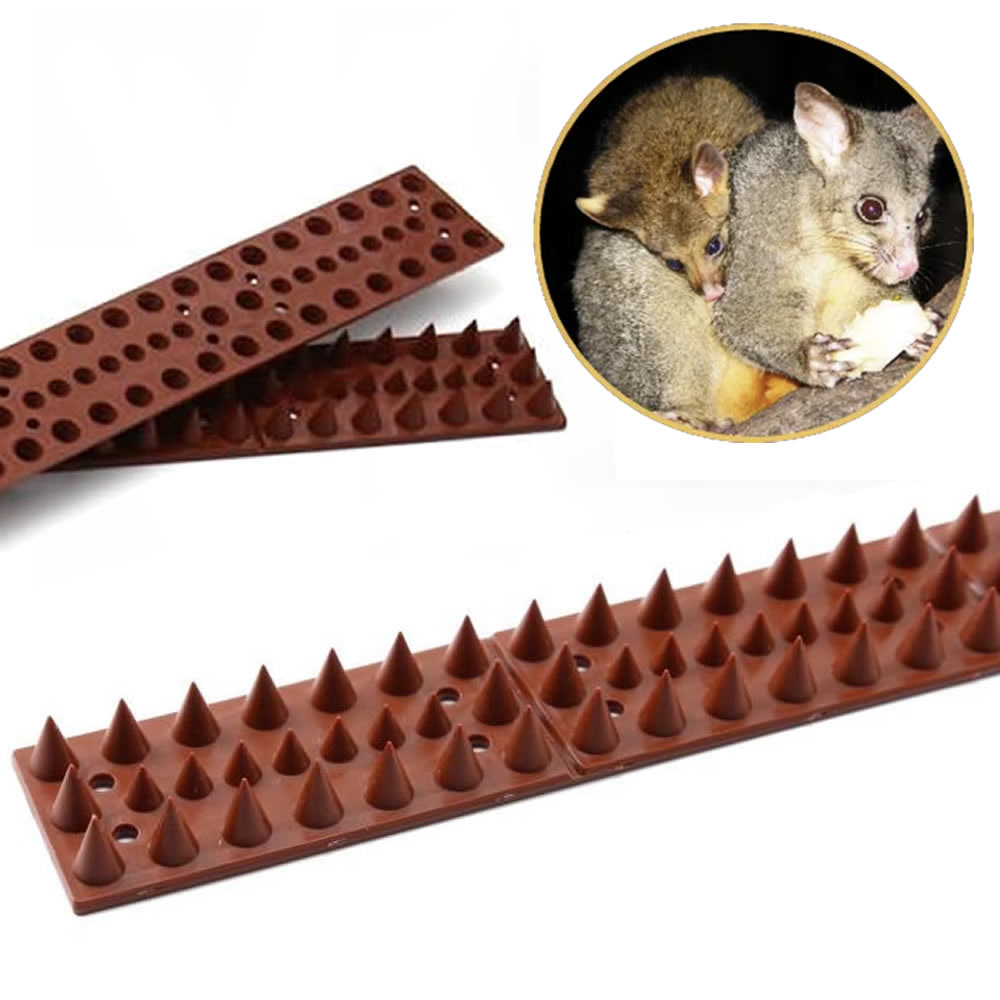
Turn the fence-top squirrel highway into a dead end with squirrel spikes that never harm the squirrel.

Blunt weatherproof spike strips sold per 50 cm length, so you can squirrel-proof one fence panel or the whole boundary.

R160 R130
Save R30
Fast, FREE delivery across South Africa on all orders R900 or more (save R190). Orders under R900 pay a flat R190 delivery.

Squirrel spikes make fence tops, rails and beams uncomfortable to walk on, so squirrels drop your fence from their nightly route and head back to the trees.

Price MatchWe want to win your business
Fast RefundOn any undelivered items
Free ShippingMinimum spend required
Easy ReturnsHassle free returns & refunds
Price is per 50 cm strip. Order as many strips as you need to cover your area.

Price: R130 R160

Buy direct online
Humane & Wildlife SafeRedirects squirrels without harm or trapping
Weatherproof PlasticHandles harsh sun, rain and frost
Sold Per 50 cm StripCover one panel or the whole fence line
Easy DIY InstallScrew, glue or cable-tie in an afternoon

Squirrel Spikes

Squirrel spikes make fence tops, rails and beams uncomfortable to walk on, so squirrels drop your fence from their nightly route and head back to the trees.

Each strip is 50 cm long and sold individually with no minimum order, so one troublesome corner or a whole boundary costs exactly what it should.

The strips are injection-moulded from weatherproof polypropylene that shrugs off harsh sun, rain and frost without going brittle.

Fitting is a simple DIY job. Screw them to timber capping, glue them to brick or metal, or cable-tie them to rails in an afternoon.

They are a humane, legal deterrent for a protected native animal. Nothing is trapped or hurt, the squirrel just picks a different path. Cats and perching birds get the same message.

Specifications

Strip length50 cm
Sold asPer strip, no minimum order
MaterialWeatherproof injection-moulded polypropylene plastic
Best forSquirrels using fence tops, rails and roof launch points
Also detersCats and larger perching birds
SurfacesFence tops, pergola beams, deck rails, gates, sheds, trellises and boundary walls
Fixing methodsScrews, outdoor adhesive or cable ties
Wildlife safetyBlunt humane deterrent, does not harm or trap squirrels

Frequently Asked Questions

How do squirrel spikes work on squirrels?

Squirrels walk their routes on soft feet and pick the same comfortable path every night. The spikes make a fence top or beam awkward to walk on, so the squirrel turns around and finds a different route. Nothing grabs, traps or hurts the animal.

Do the spikes hurt squirrels?

No. The spikes are blunt plastic points, not blades. They feel uncomfortable underfoot, which is enough to send a squirrel looking for a better path, and that is the whole trick.

Are squirrel spikes legal?

Yes. Humane deterrents that simply make a surface uncomfortable are legal. What is illegal in South Africa is harming, poisoning or trapping squirrels without a licence, because they are protected native wildlife. Spikes keep you on the right side of that line.

Can I trap or relocate a squirrel myself?

No. Squirrels are protected, and trapping or moving one without a licence can bring serious fines. A relocated squirrel usually does not survive in unfamiliar territory either. If an animal has to be physically removed, call a licensed squirrel removalist.

There is a squirrel living in my roof. Will spikes fix that?

Not on their own, and the order matters. Never block an entry point while the squirrel is still inside, because a sealed-in squirrel will die in your roof. Have a licensed removalist get it out first, seal the entry, then fit spikes on the fence tops and launch points so the roof is harder to reach next time.

How do squirrels get onto a roof in the first place?

Almost always by climbing something and jumping. Fence runs beside the house, pergolas, trellises and overhanging branches are the usual launch pads. Trim branches back a couple of metres and run spikes along the launch points within jumping range of the roofline.

How long is each strip?

Each strip is 50 cm long. Measure the run you want to cover in metres, double the number, and that is your strip count. Add a few extra for cuts and corners.

How many strips do I need for my fence?

For squirrels you rarely need the whole boundary. Cover the sections the squirrel actually uses, which means the runs near the house, the corner where it climbs up, and any panel under an overhanging branch. Droppings and scratch marks map the route for you.

Is there a minimum order?

No. Strips are sold individually, so you can buy three for one troublesome corner or sixty for the full fence line.

What are the spikes made of?

Weatherproof injection-moulded polypropylene plastic. It handles sun, rain and frost, nothing rusts, and there are no batteries or moving parts.

How do I fix the strips to my fence?

Screws work best on timber fence capping. Outdoor adhesive suits brick, render and metal. Cable ties are handy on railings and are the renter-friendly choice because they come off without a trace.

Can I cut the strips to length?

Yes. The plastic base cuts cleanly with snips or a small saw, so you can finish a run neatly at a post or corner.

Will they stop squirrels eating my fruit trees?

They close the fence route, which is how squirrels reach most backyard fruit trees. Spike the fence runs near the tree and trim any branches that bridge across from other trees or the shed. A squirrel that has to cross open ground often decides the fruit is not worth it.

Can they protect my veggie garden and roses?

Yes, in the same indirect way. Squirrels usually lean or drop into garden beds from a fence top. Run spikes along that fence section and the easy route is gone, which protects rose bushes, herbs and raised beds without touching the plants themselves.

Do they work on pergolas and deck rails?

Pergola beams and deck rails are classic squirrel walkways, and the strips fit both. Cable ties suit round rails, screws suit timber beams.

Will they keep cats off the fence too?

Yes. Cats dislike walking on spikes for the same reason squirrels do. If wandering cats are your main problem, our cat spikes page covers that use in detail.

Do they deter birds as well?

They do. These strips are from the same family as our bird spikes, so a run fitted for squirrels will also stop pigeons perching along that fence.

Won't the squirrel just find another way around?

It may try, which is why you treat the launch points and not just one panel. No deterrent turns away every squirrel every time, but cover the routes it actually uses and make the detour hard enough, and the fence stops being worth the effort.

Should I give the squirrel somewhere else to go?

It is a kind touch, and it works in your favour. A squirrel pushed off your fence still needs a home and a food path. A nest box in a tree away from the house gives it a better option than your roof, which makes the spikes' job easier.

Are the strips safe around children and pets?

Used as directed, yes. They belong on fence tops, beams and rails, up where hands do not go. The points are uncomfortable rather than sharp enough to wound.

Can I use them on a rental or strata fence?

Usually, but ask first. Renters should check with the landlord, and strata owners may need approval for shared fences. Cable-tied strips leave no marks, which makes that conversation easier.

Do the strips need any maintenance?

Barely any. Brush off leaves and cobwebs now and then so the spikes stay clear. That is the whole job.

How long do they last outdoors?

Years. The plastic is UV-stable and weatherproof, so it does not go brittle after a couple of summers, and there is nothing mechanical to fail.

Can I paint them to match my fence?

Yes. The plastic takes outdoor paint well, so the strips can disappear into a dark fence line. Paint before fitting for the neatest finish.

Will squirrels damage the strips?

No. The polypropylene is moulded to flex rather than snap, and a squirrel does not stay on the strip long enough to test it. It steps on, dislikes the footing and backs off.

Do you deliver across South Africa?

Yes, to every South African address with a tracked courier. Delivery is free on orders over R900, with a flat R190 charge under that. A tracking link lands in your inbox as soon as your order ships.

How long does delivery take?

Most metro orders arrive within 2 to 5 working days. Regional and remote addresses can take a little longer.

What payment methods can I use?

You can pay by card through Stripe or with PayPal. Both are processed securely and we never see or store your card details.

What if my order arrives damaged?

Your purchase is covered by the Consumer Protection Act 68 of 2008. Contact us with your order number and a photo of the damage, and we will arrange a replacement or refund.

Can I return them if I change my mind?

Yes, within 14 days of delivery. Keep the strips unused and in resaleable condition with their packaging, and see our Refunds and Returns page for the simple steps.

How to Keep Squirrels Off Your Fence, Roof and Garden: The Complete Guide

8 min read Bird Spikes South Africa

You hear it before you see it. A four-beat gallop across the roof after dark, a fence that shakes under something heavier than a cat, tomatoes that vanish the night before you planned to pick them. Squirrels are creatures of habit. Once one adds your fence to its nightly circuit, it runs the same route at the same time until something about that route changes. This guide covers how to change it with squirrel spikes, legally, humanely and without turning your garden into a construction site.

The Law Comes First: Squirrels Are Protected

Everything about squirrel control in South Africa starts from one fact. Squirrels are protected native wildlife in every state and territory. It is illegal to harm or poison them. It is illegal to trap them without a licence. It is also illegal to relocate one yourself, and for good reason, because a squirrel dropped in unfamiliar bushland usually does not survive the week.

None of that is bad news, because it points straight at the right tool. You do not need to hurt or catch a squirrel. You only need to make its favourite path uncomfortable enough that it picks a different one. That is the entire job of a blunt spike strip. The squirrel arrives, finds the footing awkward, turns around and heads back the way it came. Nothing is trapped and nothing is injured. The best humane squirrel deterrent is the one that never touches the animal at all, and that is exactly what these strips are.

Why Your Fence Is a Squirrel Highway

Watch a squirrel for one evening and you will see why fences matter so much. Down at ground level there are dogs, cats and cars. Up on the fence line there is a dry, flat, elevated road that connects every tree, shed and roof in the street. Squirrels use fence tops the way we use footpaths.

The route is rarely random. A squirrel leaves its den around dusk, follows the same fence runs to the same food, and heads home before dawn. Look for the evidence and you can map the whole commute. Droppings along the capping, scratch marks at the climb points, a worn patch where it jumps to the pergola. That map tells you where the spikes go, and it is usually a far shorter list than your whole boundary.

What Spikes Do, and What They Do Not

A squirrel spike strip is a row of blunt plastic points on a flat base. It does not stab, snag or spring. It simply removes the comfortable footing a squirrel needs to walk a narrow surface, the same way gravel ruins a barefoot shortcut. Faced with awkward footing and a long balancing act, the squirrel takes the detour.

A dose of honesty belongs here too. No deterrent turns away every squirrel every single time. Squirrels are clever, agile and stubborn about routes that lead to food. What the strips do is make your fence the hardest option on the street. Treat the real routes and the launch points, and the fence stops earning its place on the nightly circuit.

Measuring Up

Each strip is 50 cm long and sold individually with no minimum order. Measure the runs you want to treat in metres, double the number, and that is your strip count. Add roughly ten percent for cuts and corners.

For squirrels you rarely need to spike an entire boundary. Concentrate on the sections that carry traffic. The fence runs closest to the house, the corner post it climbs, the panel under an overhanging branch, the rail beside the fruit trees. A handful of well-placed strips on the right panels beats a hundred spread thin.

Keeping Squirrels Off the Roof

Roof noise is the complaint that brings most people to this page, and the fix starts well away from the roof itself. A squirrel gets onto a roof by climbing something and jumping. The usual launch points are a fence run beside the house, a pergola or carport frame, a trellis, and branches that overhang the gutter line.

So work through the approach route instead of the destination. Trim branches back a couple of metres from the roofline first, because even the best squirrel spikes for fences cannot stop an animal that drops in from a gum tree. Then run strips along the fence sections nearest the house, across the pergola beams and along the top of any trellis within jumping range. You are not fencing the squirrel out of the yard. You are cutting the ramp to the roof.

Already Got a Squirrel in the Roof Void?

This is the one job where spikes alone are the wrong first move, and getting the order wrong can be fatal for the animal. Never seal an entry point, and never spike the last access route, while a squirrel is still inside the roof. A squirrel shut in a roof void will die there, which is both illegal and a smell you will not forget.

The right order is simple. A licensed squirrel removalist gets the animal out, since trapping inside a building is legal for them in ways it is not for you. The entry point gets sealed once the squirrel is confirmed gone. Then the spikes go onto the fence tops, beams and launch points so the next squirrel in the street finds the climb no longer worth the effort. Spikes are the prevention layer, not the eviction tool.

Fruit Trees, Veggie Beds and Roses

Garden raids run along the fence too. A squirrel works its way along the capping, then leans or drops into whatever is in reach. Rose buds, herb pots, raised veggie beds, the fruit trees planted along the fence line. The plants take the damage, but the fence carries the traffic.

That is why spiking the approach usually beats netting every single plant. Run strips along the fence sections beside the garden beds and behind the fruit trees, and trim any branch that bridges from tree to fence. A squirrel that has to cross open lawn to reach the silverbeet is exposed to every dog in the neighbourhood, and it knows it. One treated fence run protects everything planted along it, which is why fence strips make such a practical squirrel deterrent for garden beds and borders.

Pergolas, Deck Rails and Other Walkways

Anything flat, narrow and elevated can join the highway. Pergola beams, deck and balcony rails, gate tops, shed roofs and brick wall capping all carry squirrel traffic, and the same strips suit all of them. Screw the base to timber beams. Cable-tie it around round rails. Glue it along masonry. If a surface shows droppings or scratch marks, it is part of the route and worth treating.

Installing Step by Step

Start with a clean surface, because dirt and old droppings weaken adhesive and mark the squirrel's territory. Scrub, rinse and let it dry. Wear gloves for this part.

Next, pick the fixing to match the surface. Screws hold best on timber fence capping and pergola beams. A bead of outdoor adhesive suits brick, render, stone and metal. Cable ties wrap neatly around railings and trellis tops, and they are the go-to for renters since they come off without leaving a mark.

Then run the strips with no gaps. A squirrel is very good at finding the one bare stretch you left near its launch point, so butt the strips hard against each other and cut the final piece to fit with snips. Pay special attention to the exact spot it jumps from, which the scratch marks will show you.

Cats and Birds Get the Same Message

One of the quiet bonuses of squirrel proofing a fence is everything else it tidies up. Cats dislike walking on spikes just as much as squirrels do, so the neighbour's tomcat loses its favourite lookout at the same time. Pigeons and doves lose the perch too, since these are the same hard plastic strips we sell for bird control. If cats are your main visitor, the cat spikes page goes deeper on that job, and for bird problems away from the fence line, the bird spike range covers ledges and rooflines.

Play Fair With the Squirrel

A squirrel you push off the fence still needs somewhere to sleep and a way to reach food, and a squirrel with options is far less determined about yours. Leave the trees at the back of the yard alone, spike only the runs that lead to the house and garden beds, and consider a squirrel nest box in a tree well away from the roof. It costs little, it gives the animal a legal, safe home, and it takes the pressure off your spikes. The goal was never to banish squirrels from the street. It is to move them along a path you can both live with.

Aftercare

Once the strips are up, the job is mostly done. Brush off leaves, twigs and cobwebs every few months so the points stay clear, and wash with mild soapy water if they get grimy. The polypropylene is UV-stable, so there is no yearly replacement round. If you want the strips to vanish against a dark fence, paint them with outdoor paint before you fit them.

The Bottom Line

Map the route, spike the busy runs and the launch points, trim the overhanging branches, and leave the squirrel a decent alternative. That is the whole playbook. At R130 per 50 cm strip with no minimum order, closing a squirrel highway costs less than one round of replacement seedlings, and nobody gets hurt along the way. In South Africa, that is not just the kind approach to a protected native animal. It is the only legal one.

Browse all bird control

Page summary

Squirrel Spikes from Bird Spikes South Africa: humane squirrel deterrent spike strips made from weatherproof injection-moulded polypropylene, sold per 50 cm strip with no minimum order. The blunt points make fence tops, pergola beams, deck rails and roof launch points uncomfortable for squirrels to walk on, so the squirrel takes a different route instead of reaching roofs, fruit trees and veggie gardens. Legal and wildlife-safe for a protected native species, since nothing is harmed or trapped. Also deters cats and perching birds. DIY fit with screws, outdoor adhesive or cable ties.